From 2D drawings to a production-ready product in four weeks
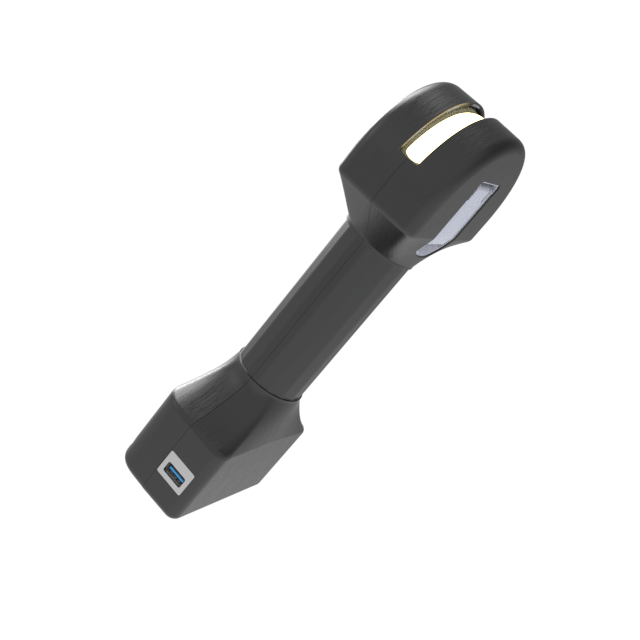
An adjustable-beam LED flashlight startup arrived with 2D drawings and a physical prototype, aiming to manufacture at Protolabs. Four weeks later it had a complete engineered CAD assembly: reflector, heat sink, and housing, with the internals fit and the files ready for tooling.
The situation
The founder is a hands-on inventor, not an engineer. His product is a handheld light whose reflector adjusts the beam spread, and he had taken it a long way alone: 2D drawings, photos, and a working physical prototype. What he didn't have was production CAD, and his first message said exactly what he needed:
“I am needing two drawings turned into CAD+ drawings in order to have them mass produced at Protolabs.”
Files from an earlier overseas designer existed, but nothing a manufacturer could tool from. Between the drawings and a production order stood the whole engineering step.
Why this is engineering, not drafting
A flashlight is a system. The reflector shapes the beam, the heat sink pulls heat off the LED, the housing holds both plus a PCB, batteries, and a switch, and every part constrains the others. Converting each drawing separately would have produced parts that don't assemble. The job was to engineer the product as one assembly and deliver files Protolabs could quote and tool.
What we did
- Ran a paid scoping consultation before any design, and split the work into reflector, heat sink, and housing.
- Engineered the reflector for beam control: elongated the profile and steepened the parabola. When the new curve conflicted with the fixed LED hole positions, CADmore reconciled both constraints instead of just executing the request.
- Built the heat sink from handwritten drawings and photos, and caught a dimensioning error in the customer's own sketch along the way.
- Modeled the housing to the physical prototype, flagged a conflict between the requested handle height and body height before it became a tooling problem, and split the housing with screw locations for prototyping.
- Fit the internals: PCB seated flush between reflector and heat sink, rechargeable batteries packaged in the handle.
- Folded Protolabs' manufacturability feedback on wall thickness and draft back into the models, so the delivered files were production-ready, not just geometrically correct.
Add-ons were quoted separately as they came up: retractable kickstand legs, a USB and battery-housing redesign, and a packaging foam mold. Each was its own small, scoped, paid piece of work.
The reaction
From the portal thread, as the assembly came together:
“The definition of awesome!!!!”
“It is such a cool feeling to see this thing take on a life of it's own...”
“This really made my day, and THANK YOU very much for staying in touch so frequently!!!!”
The follow-on work says the same thing: over the next year he came back four times, for the legs, the USB housing, the packaging file, and reflector subcomponents for his optics engineer.
Where CADmore fits
CADmore engineered the files; production belongs to the manufacturer, in this case Protolabs, the customer's pick from day one. That is the model: CADmore does the design and engineering step, your manufacturer makes the product, and our advice stays unbiased because we aren't selling you production.